Software / 2026
Fantasy IQ
A full-stack fantasy football application for managing leagues, researching players, simulating drafts, and analyzing trades with AI assistance.
Context
The problem
Fantasy decisions are connected, but the information behind them is often scattered. A high-scoring player may be a poor fit for a specific roster; a trade can look different under another scoring format; a strong season total can hide changing availability or matchups. I wanted one system that keeps those relationships visible from league setup through draft and trade decisions.
How it fits together
Architecture & approach
The platform combines historical statistics, current-context inputs, custom league rules, and AI-generated analysis. Those inputs can differ in freshness and completeness. The interface needs to distinguish what the data shows, what the system recommends, and where context is missing.
- NFL dataStats + context
- League + rosterRules + team needs
- Analytics + AIRanking + reasoning
- Decision toolsDraft · players · trades
My contribution
What I worked on
- Built the interface with Next.js, React, and TypeScript, backed by FastAPI and PostgreSQL.
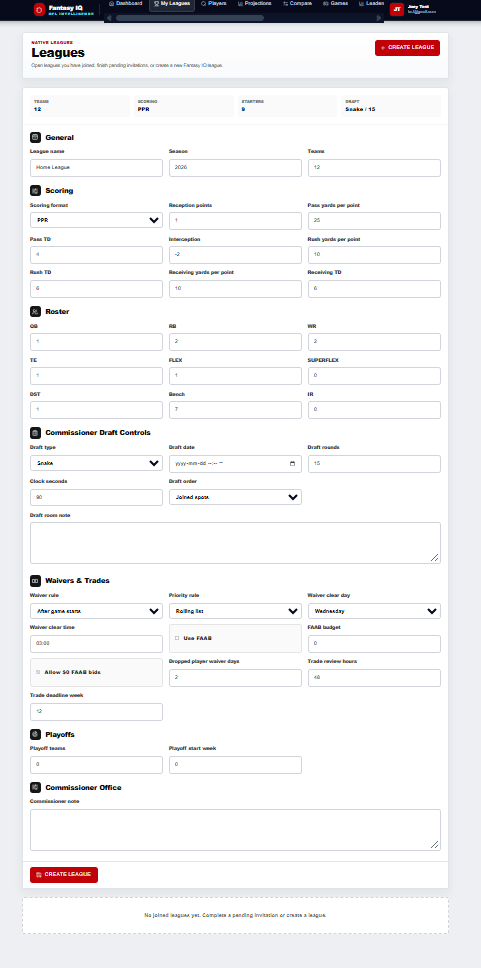
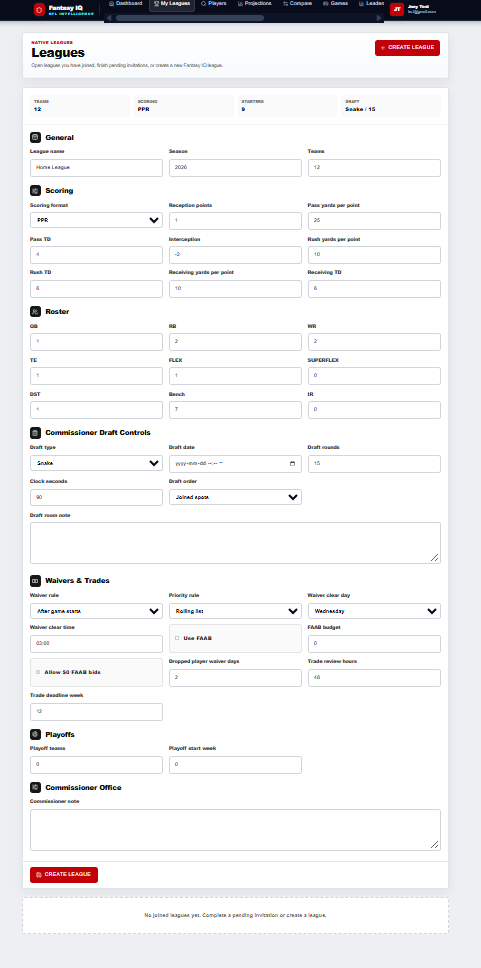
- Added league settings for scoring, rosters, drafts, waivers, trades, and playoffs.
- Developed a draft simulator and roster-aware recommendations using projections, positional needs, and league scoring.
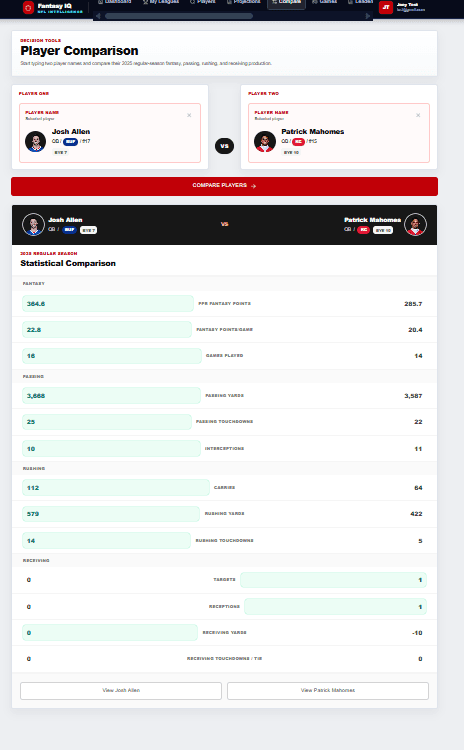
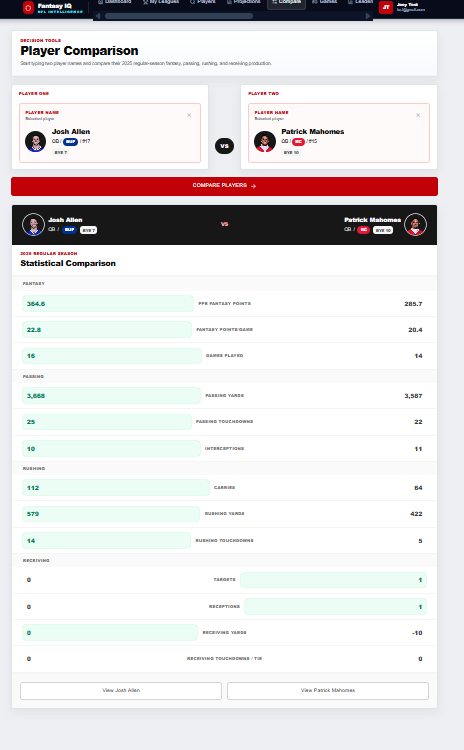
- Added AI-assisted player, draft, and trade analysis, plus player profiles, comparisons, and game information.
Technical choices
The choices behind the work
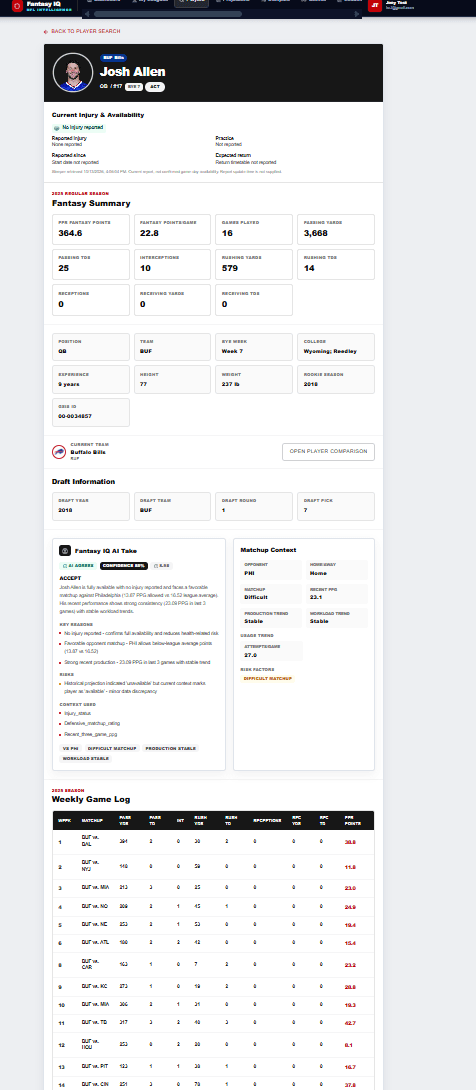
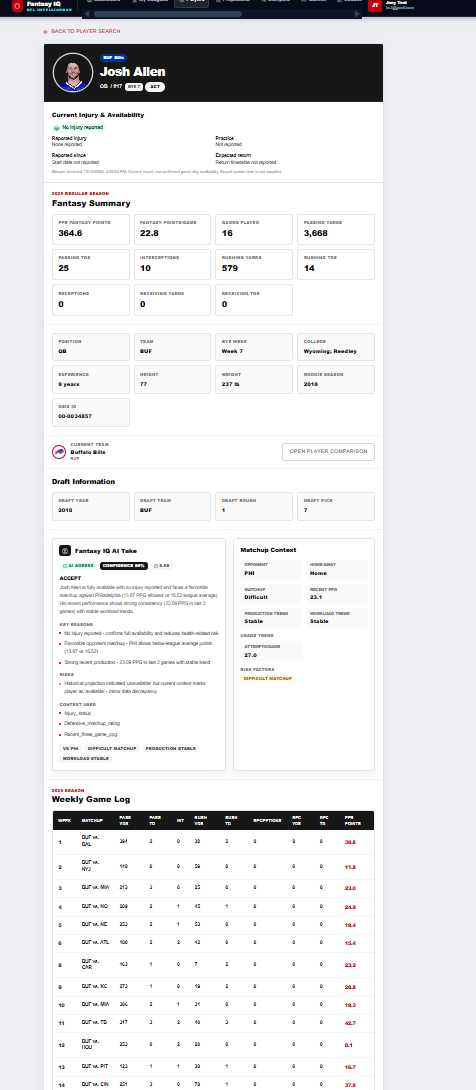
A richer recommendation needs a clearer explanation. The player-analysis screen exposes confidence, reasons, risks, and missing context so an answer can be inspected instead of appearing as an unexplained score.
League customization increases the number of valid scenarios. Scoring settings and roster constraints need to remain explicit across the simulator, comparisons, and recommendation workflows.
AI adds another interpretation of the evidence, not a guarantee that the decision is correct. Keeping statistical comparisons and contextual inputs visible lets the user assess the recommendation against the underlying information.
Looking back
Results & current status
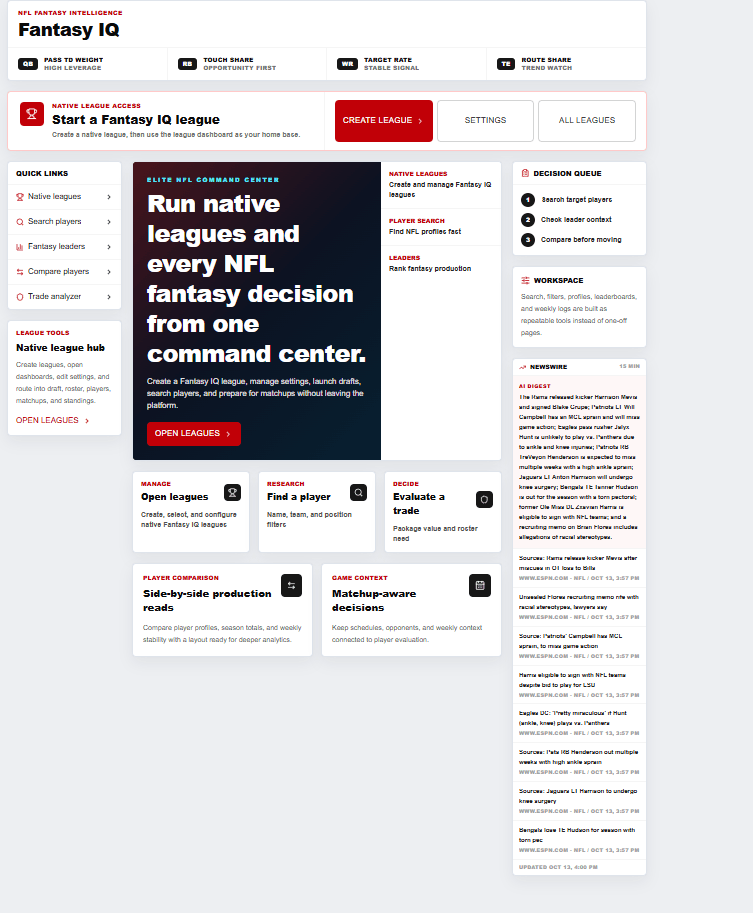
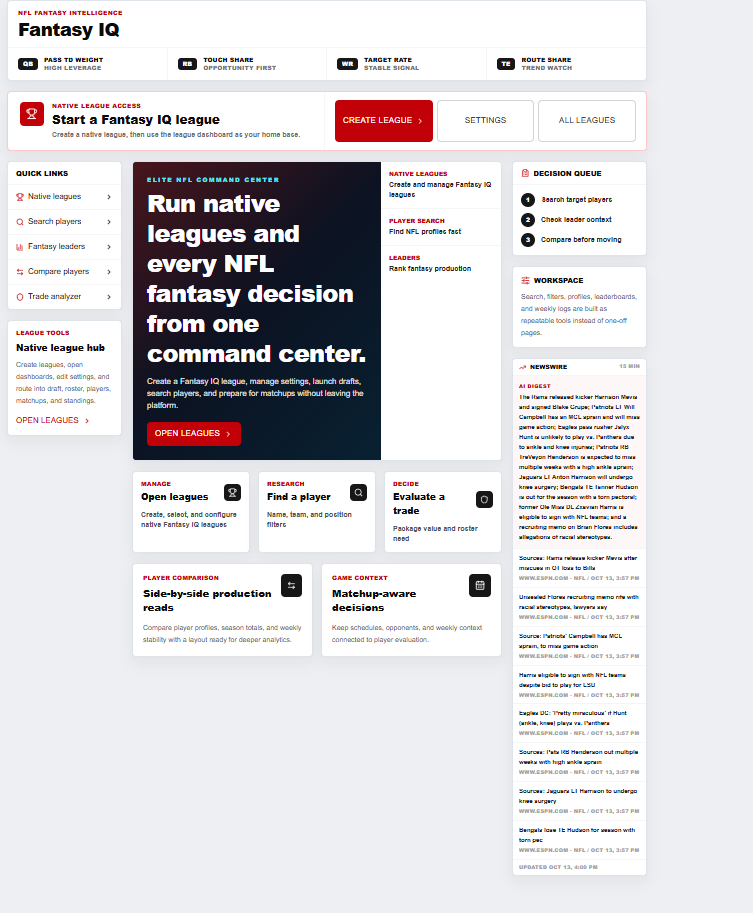
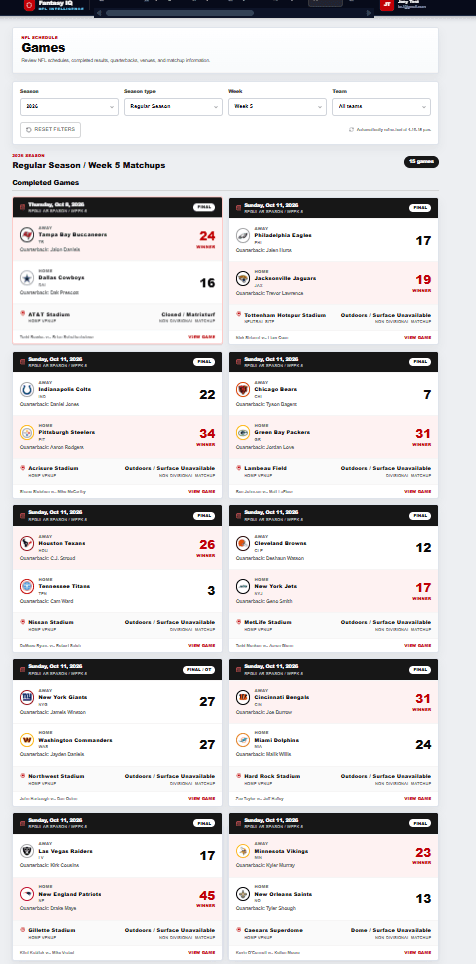
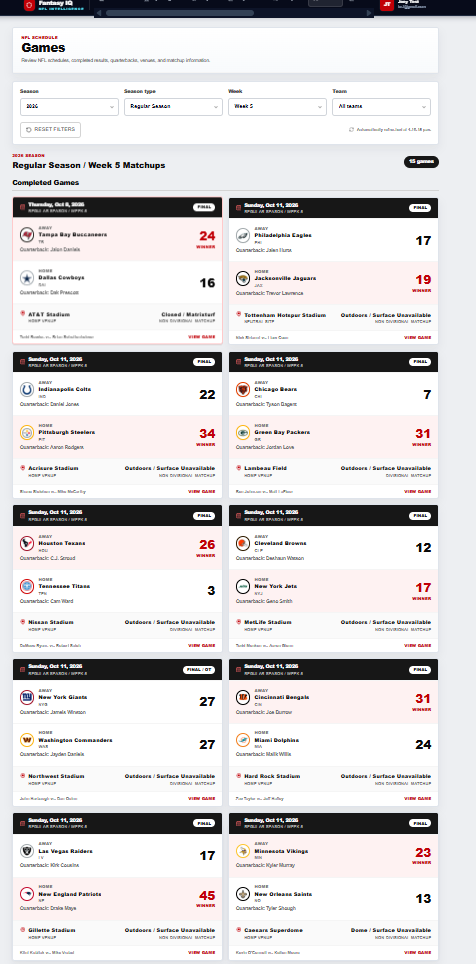
Working application with continuing development. The screenshots show the dashboard, league settings, player analysis, comparisons, and games. Recommendation accuracy and performance improvements have not been benchmarked.
Testing and evidence
Development included iterative testing of recommendation logic and adaptation to usability requirements. The gallery shows the dashboard, league configuration, player AI analysis, comparisons, and games; the current product also includes draft simulation and AI-assisted draft/trade workflows. The next evaluation is to exercise the same decisions across different roster states and scoring settings, then inspect the consistency of the recommendations. Historical backtesting and measured gains in prediction or win rate remain to be established.
What I learned & what comes next
The engineering challenge extends beyond ranking players: the same league rules, roster state, and evidence need to make sense across several screens and decision tools. Making reasons and missing context visible gives users a way to question the output and gives the developer a clearer path for improving it.
From the project
Screenshots
Keep exploring